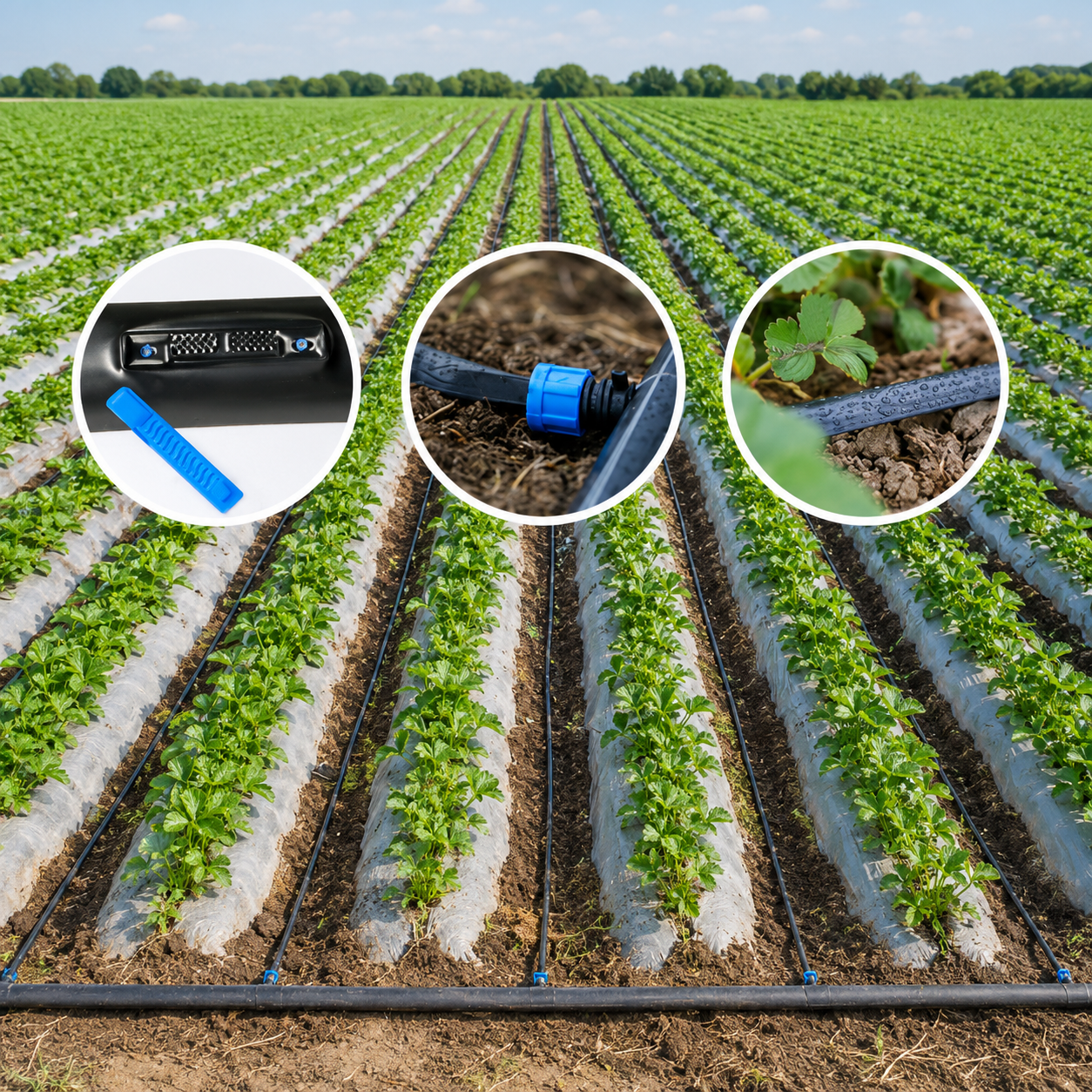
Discover how drip irrigation works, explore its essential components, understand common agricultural applications, and learn how to choose a reliable irrigation system for farms, greenhouses, orchards, and commercial growing projects.
Every growing season presents the same challenge: supplying crops with enough water while minimizing waste and controlling production costs. As water resources become increasingly valuable and labor costs continue to rise, growers are looking for irrigation solutions that deliver consistent performance with greater efficiency.
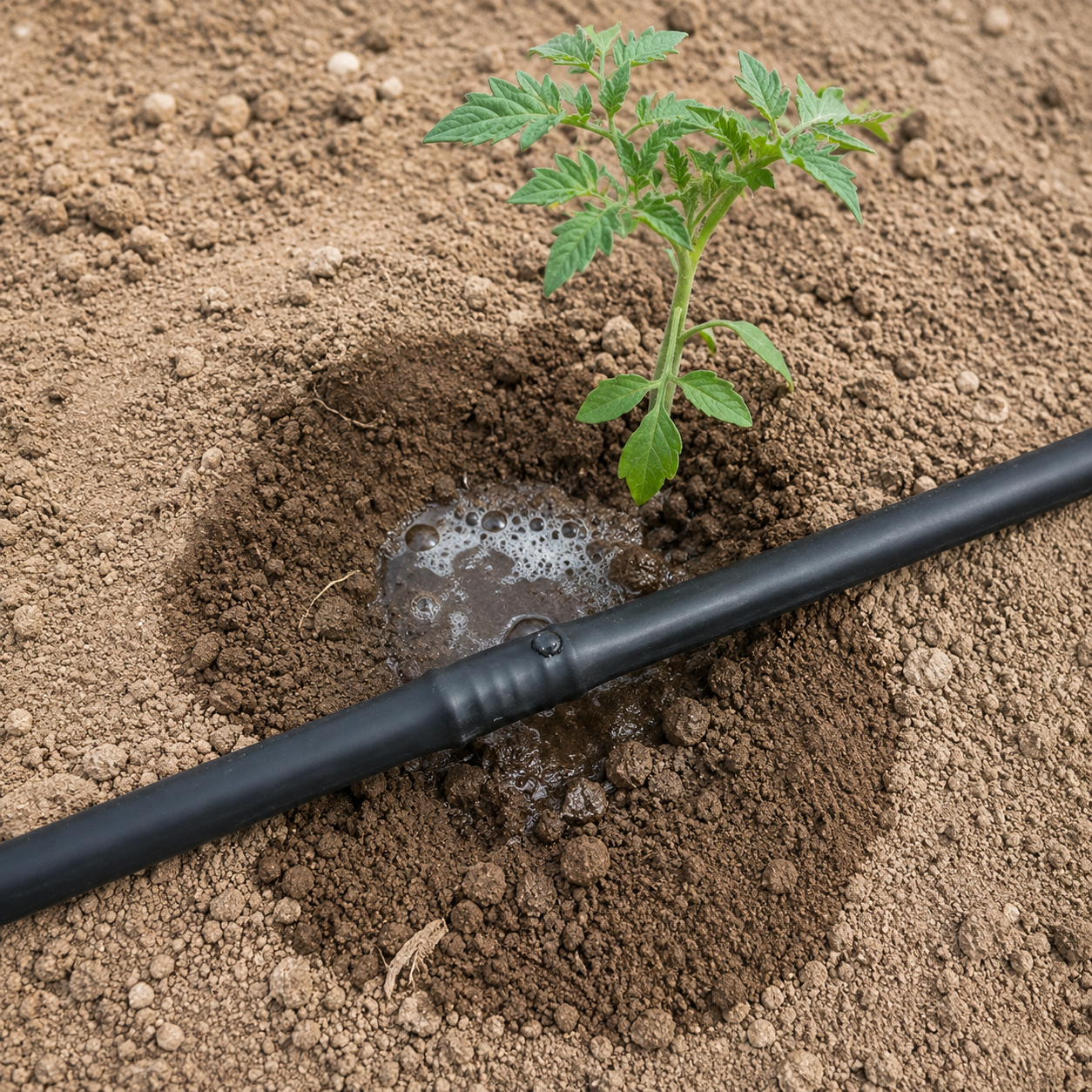
Drip irrigation has become one of the most widely adopted irrigation methods because it applies water directly to the plant root zone instead of irrigating the entire field. By delivering water slowly and precisely where plants need it most, drip irrigation helps improve irrigation efficiency, reduce evaporation and runoff, and support more uniform crop growth.
However, achieving reliable performance requires more than selecting quality drip tape or emitters. Water quality, filtration, operating pressure, pipeline design, and component compatibility all influence how efficiently an irrigation system performs over time. For this reason, successful projects are built around complete system design rather than individual products.
The increasing adoption of drip irrigation reflects the changing demands of modern agriculture rather than a simple shift in irrigation technology.
Today's growers are expected to produce higher yields while using fewer resources. Water shortages, rising fertilizer costs, and increasing labor expenses have encouraged farms around the world to adopt irrigation systems that improve efficiency without adding unnecessary complexity.
Compared with conventional irrigation methods, drip irrigation delivers water directly to the root zone, where plants absorb it most effectively. This targeted application helps maintain more stable soil moisture, improves fertilizer utilization, reduces weed growth between crop rows, and minimizes water loss caused by evaporation or runoff.
For commercial farms, the greatest advantage is not simply saving water. A properly designed system provides greater control over irrigation management throughout the growing season, making crop production more predictable and easier to manage.
A drip irrigation system distributes water through a network of pipes and tubing. Water first passes through a filtration system before pressure is regulated and delivered into the irrigation pipeline. From there, drip tape or drip lines release water slowly through emitters positioned near the plant roots.
Because water is applied gradually and directly into the root zone, plants receive a consistent supply of moisture while reducing unnecessary surface wetting.
The process may appear simple, but long-term performance depends on selecting compatible components and maintaining stable operating conditions.
Every component has a specific role. The reliability of the entire irrigation system depends on how well these components work together.
| Component | Purpose |
|---|---|
| Water Source | Supplies irrigation water to the system |
| Filtration System | Removes sand, algae, and suspended particles to protect emitters |
| Pressure Regulator | Maintains stable operating pressure |
| Mainline & PE Pipe | Distributes water throughout the irrigation network |
| Drip Tape / Drip Line | Delivers water directly to the plant root zone |
| Emitters | Control water flow for individual plants or crop rows |
| Valves & Fittings | Connect and manage different irrigation sections |
| Fertigation Equipment | Injects fertilizer into the irrigation water when required |
Choosing high-quality individual products is important, but system compatibility is equally critical. An efficient irrigation system functions as one integrated solution rather than a collection of separate components.
Although the operating principle remains the same, irrigation requirements vary across different agricultural environments.
Greenhouse vegetable production often requires frequent irrigation with precise flow control to support intensive cultivation.
Fruit orchards usually depend on longer pipeline layouts with stable pressure to ensure consistent water distribution across every tree.
Vineyards commonly use drip irrigation to improve water efficiency while maintaining balanced soil moisture throughout the growing season.
Landscape irrigation emphasizes flexible zoning and simplified maintenance for parks, commercial properties, and public green spaces.
Field crops and nurseries also benefit from customized drip irrigation systems designed according to crop type, planting density, and local growing conditions.
Many growers focus primarily on drip tape or emitters when comparing products. In practice, most irrigation problems originate elsewhere.
Insufficient filtration can cause emitters to clog.
Unstable pressure often results in uneven water distribution.
Poor-quality fittings may create leaks throughout the pipeline.
Improper system design can reduce irrigation uniformity even when premium products are used.
For this reason, experienced irrigation designers evaluate the entire system instead of selecting products individually.
Before comparing prices, it is helpful to evaluate several important factors.
For distributors and agricultural projects, long-term reliability usually creates greater value than choosing the lowest initial purchase price.
Every irrigation project has unique requirements. Climate conditions, crop types, water quality, and field layouts all influence the final system configuration.
Rather than recommending a standard product package, we work with customers to identify solutions that match local growing conditions, project requirements, and long-term operational goals.
Whether you are developing a new irrigation project or expanding your irrigation product portfolio, our technical team is available to provide practical product recommendations and professional support.
The recommended pressure depends on the type of drip tape, emitters, and overall system design. Proper pressure regulation helps maintain uniform water distribution.
Yes. Drip irrigation is widely used in citrus, apple, olive, grape, and many other fruit-growing applications.
Cleaning frequency depends on water quality, filtration type, and operating conditions. Regular maintenance helps prevent emitter clogging.
Drip tape is commonly used for seasonal crops, while drip line is generally selected for permanent or long-term installations.
Yes. Fertigation equipment allows water-soluble fertilizers to be injected directly into the irrigation network, improving nutrient application efficiency.
A successful drip irrigation system is not defined by a single component but by how every part of the system works together. From filtration and pressure regulation to PE pipes, drip tape, and fittings, each element contributes to reliable irrigation performance.
Whether you are planning a greenhouse installation, upgrading an orchard, or sourcing irrigation products for distribution, understanding the complete irrigation system is the first step toward improving efficiency and supporting long-term crop production.