
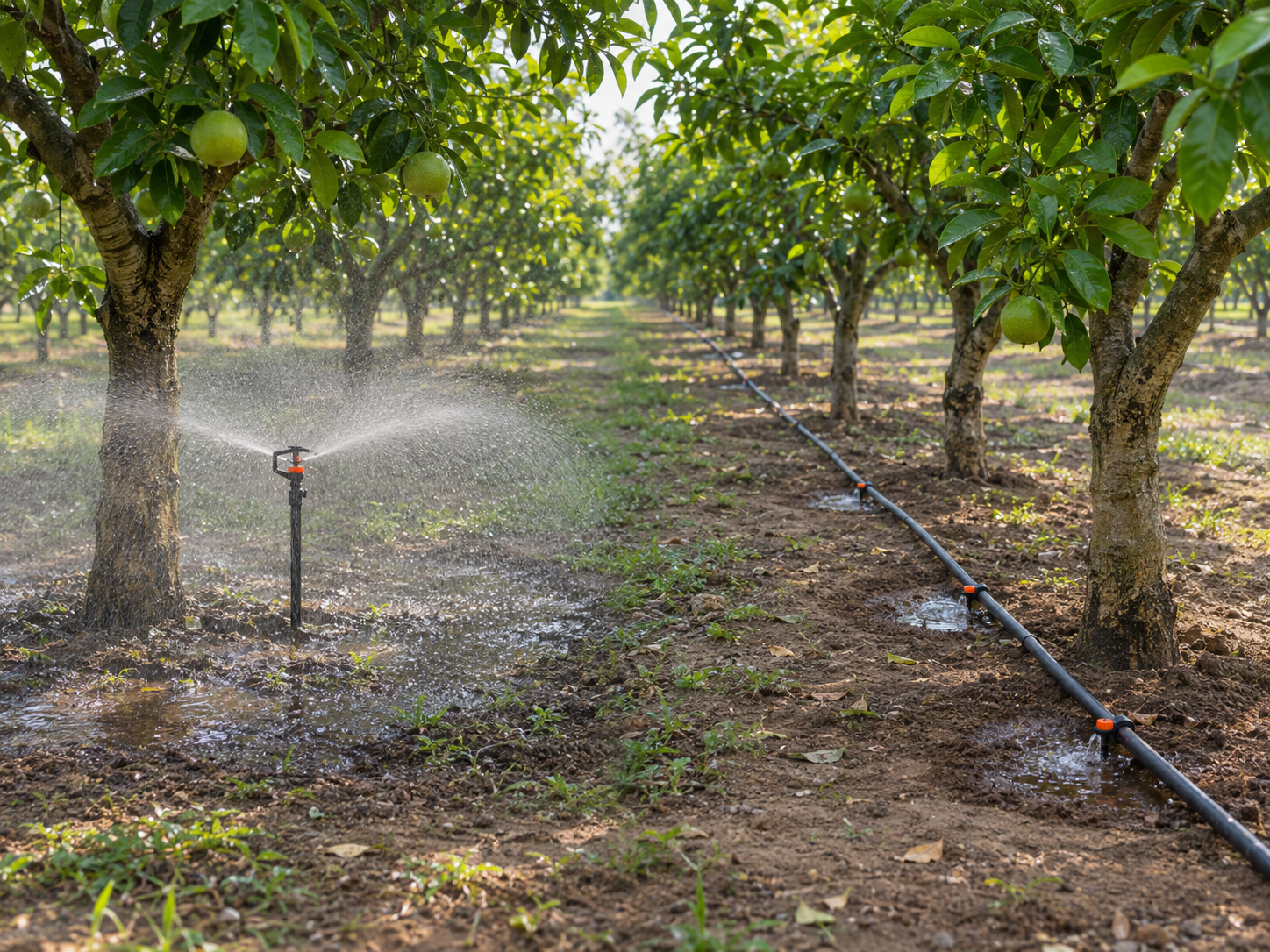
Choosing an orchard irrigation method starts with the wetted area the crop layout needs, not with a product photo or a single flow-rate number. A micro sprinkler system distributes water through a small spray pattern around each outlet, while dripline or drip tape delivers water from emitters arranged along a lateral. Either can work in a suitable design; crop spacing, soil, water source, topography, operating schedule and verified product data determine the fit.
This guide compares the two options for orchard and nursery projects and gives buyers a checklist for comparing layouts and requesting a quote. It does not prescribe a universal spacing or pressure: those must come from the selected model’s performance data and the site design.
| Project factor | Micro sprinklers | Dripline or drip tape |
|---|---|---|
| Water placement | A spray pattern wets an area around each sprinkler. Actual coverage changes with model, nozzle, pressure, mounting height and site conditions. | Emitters deliver water along a lateral, creating a wetted zone along the planted row. The pattern depends on emitter spacing, discharge, soil and operating conditions. |
| Layout basis | Tree or bed position, verified spray pattern, overlap, riser or stake position, and the number of outlets in each operating zone. | Row length, lateral position, emitter spacing and discharge, number of lines per row, and the zone operating plan. |
| Data to confirm | Flow at the intended pressure, wetted diameter or radius, nozzle, filtration requirement and recommended mounting arrangement. | Discharge per emitter or per length at the specified pressure, emitter spacing, pipe/tape size, filtration requirement and allowable operating conditions. |
| Field verification | Check pressure and discharge at representative points, then inspect the spray pattern for gaps or uneven distribution. | Check operating pressure, flush the laterals as specified and compare emitter output at representative points. |
These are planning differences, not a claim that one method is always more efficient. NRCS guidance describes orchard sprinklers as small sprinklers used to wet areas around trees, while microirrigation design depends on emitter characteristics, pressure and site conditions. Review the NRCS National Engineering Handbook chapter on microirrigation for general design context.
Micro sprinklers are worth evaluating when a project calls for a spray pattern around trees, nursery plants or another defined growing area. Orchard sprinkler placement may be under, above or near the canopy depending on the crop, system purpose and approved design. Do not assume that a product’s stated rotation angle describes its wetted diameter or recommended spacing.
Start by mapping tree or bed spacing, row direction, slope and the intended wetted area. Compare the selected sprinkler’s coverage information at its rated pressure and mounting height with that map. Account for wind exposure and nearby plants or structures that may interrupt the spray. If neighboring patterns need to overlap, use the manufacturer’s coverage data and a project-specific layout rather than copying a spacing from another nozzle.
For example, AquaGrow’s 360° rotating micro sprinkler listing provides approximate flow, pressure and spray-diameter ranges, but not a verified flow-by-pressure curve or a universal spacing recommendation. The 360° description refers to the spray pattern; it does not establish how far apart units should be installed. Confirm the exact nozzle and performance at the planned operating pressure before sizing a zone.
Dripline or drip tape is a natural option to compare when the design is organized around crop rows and line-based emitters. The buyer should confirm the emitter discharge and spacing, the number and placement of laterals, and the intended operating pressure. A published flow figure is useful only when its unit and test pressure are clear.
View AquaGrow’s drip pipes and tubes and drip tape ranges as product options to evaluate against the project layout. For emitter-line details, also see our guide to choosing drip irrigation pipes and tubing for farm projects.
If key values are not yet known, mark them “to be confirmed” in the enquiry. A supplier should confirm product-specific performance and commercial terms for the selected model; a general category page cannot establish the design duty point.
Both are used in microirrigation, but their water-distribution patterns differ. A micro sprinkler applies water as a spray around an outlet; dripline or drip tape delivers water through emitters along a lateral. The actual wetted area depends on the product and design.
Use the selected model’s verified wetted pattern at the intended pressure and mounting height, then account for crop geometry, overlap, wind, slope and obstructions. Do not treat spray diameter as a ready-made spacing value.
There is no universal answer based on the product type alone. Water use depends on crop demand, soil, irrigation schedule, system design, uniformity and management. Compare site-specific designs and operating data rather than relying on a generic savings claim.
Send a field sketch, crop and spacing information, water-source details, available pressure and flow, proposed zone schedule and destination. If you are still gathering data, contact AquaGrow through the project enquiry page and mark unknown values clearly.
Need help comparing products for your layout? Share the project sketch, intended crop, water source and target method through our contact page. Product flow, pressure, coverage, filtration and commercial terms must be confirmed for the selected SKU.